Tonal Balance Control 3
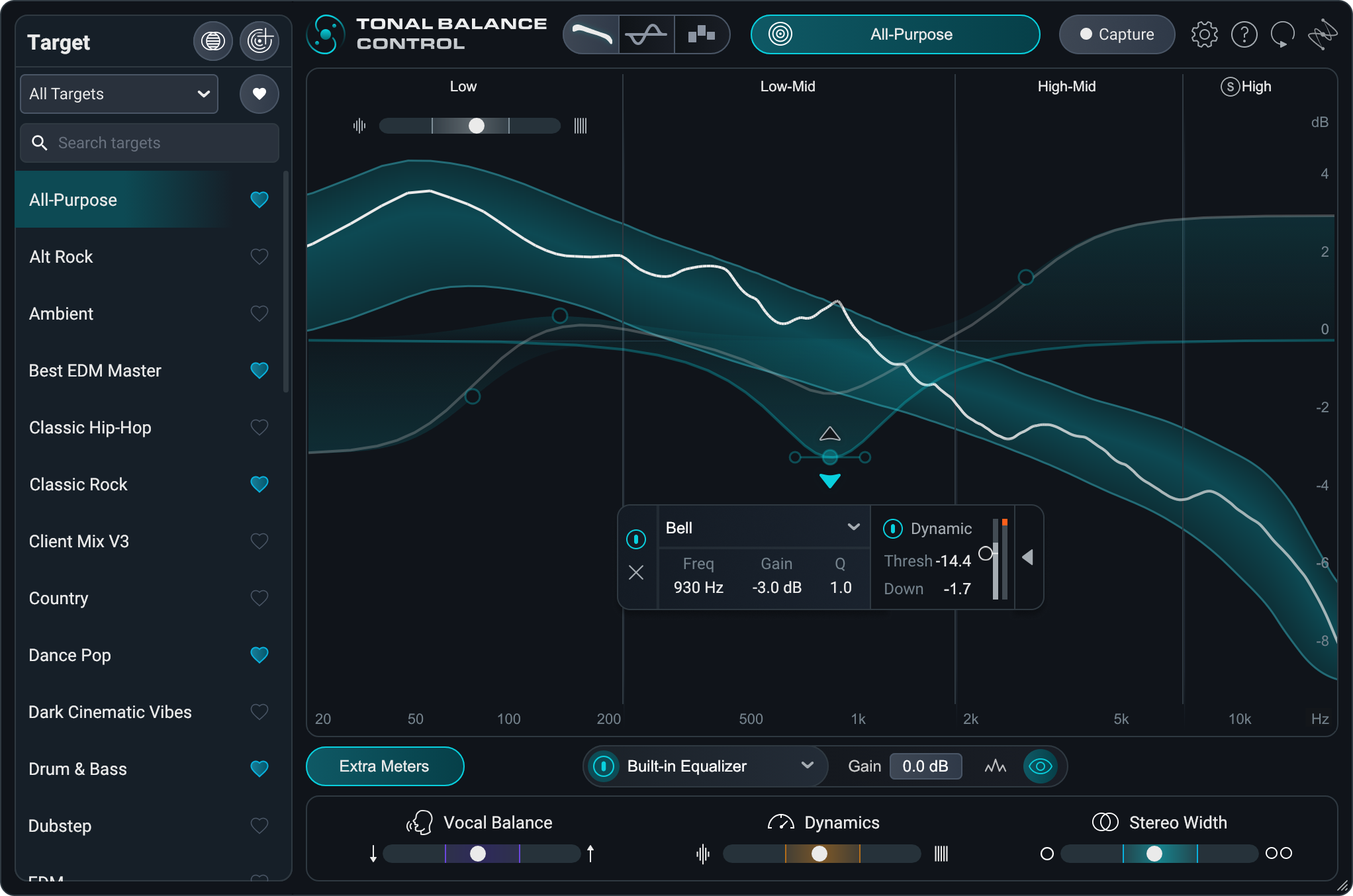
iZotope's flagship referencing tool, evolved from an ecosystem-dependent plugin into a fully standalone mixing and mastering companion.
Target Audience
Mixing and mastering engineers
Environment
Digital Audio Workstations
Role
Lead Designer
Scope
End-to-end product design

What is TBC?
A compass for your mix
Tonal Balance Control is a referencing tool for professional mixing and mastering engineers. When finishing a record, engineers need to know whether their mix will sound right on any system, from studio monitors to earbuds. TBC gives them a visual read of their mix's frequency balance compared against professional reference tracks, so they can make informed decisions before a song goes out the door.
The challenge
Before any design work began, I ran qualitative research sessions with real users through Lookback, conducting live one-on-one interviews to understand how engineers were actually using TBC in their workflow. I also designed and distributed surveys to our beta groups to validate what we were hearing and identify which problems were worth solving given our scope and capabilities. Three clear themes emerged.
Generic targets that didn't fit
As the music landscape continues to expand, fixed reference targets struggled to reflect the diversity of modern production. Users often found them too generic to feel relevant to their mixes.
Better together but worse alone
The product’s value was closely tied to the broader iZotope ecosystem. While effective in combination with other tools, this created a dependency that reduced its usefulness as a standalone solution.
Missing depth of analysis
Users wanted access to deeper analysis that existed elsewhere in the iZotope product ecosystem but was not available within TBC up until this point.
Risks and considerations
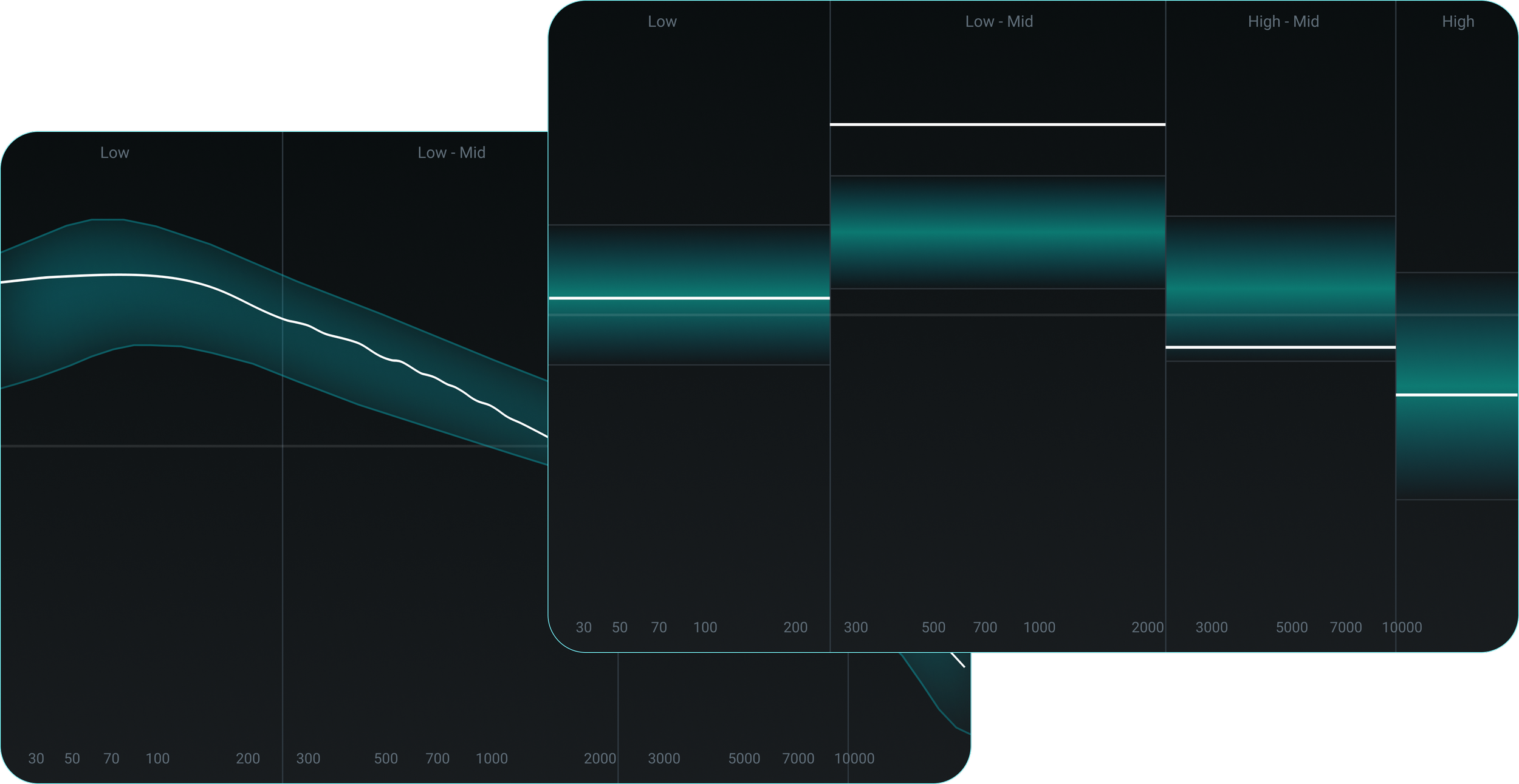
Protecting the simplicity users loved
User research consistently highlighted the simplicity of Tonal Balance Control 2 as a core strength. Expanding the product naturally introduced the risk of the added complexity disrupting familiar workflows. Additional targets, controls, and analysis could easily pull focus away from the core metering experience. The challenge was to increase flexibility and depth while preserving the simplicity, speed, and clarity users relied on. My guiding principle throughout was that every new feature had to earn its place without demanding attention from users who didn't need it.
Infinitely personalized references
When stock references stop being enough
Our research showed that users weren't finding themselves in the existing target library. As genres blend and evolve, a fixed set of references increasingly felt like a bad fit.
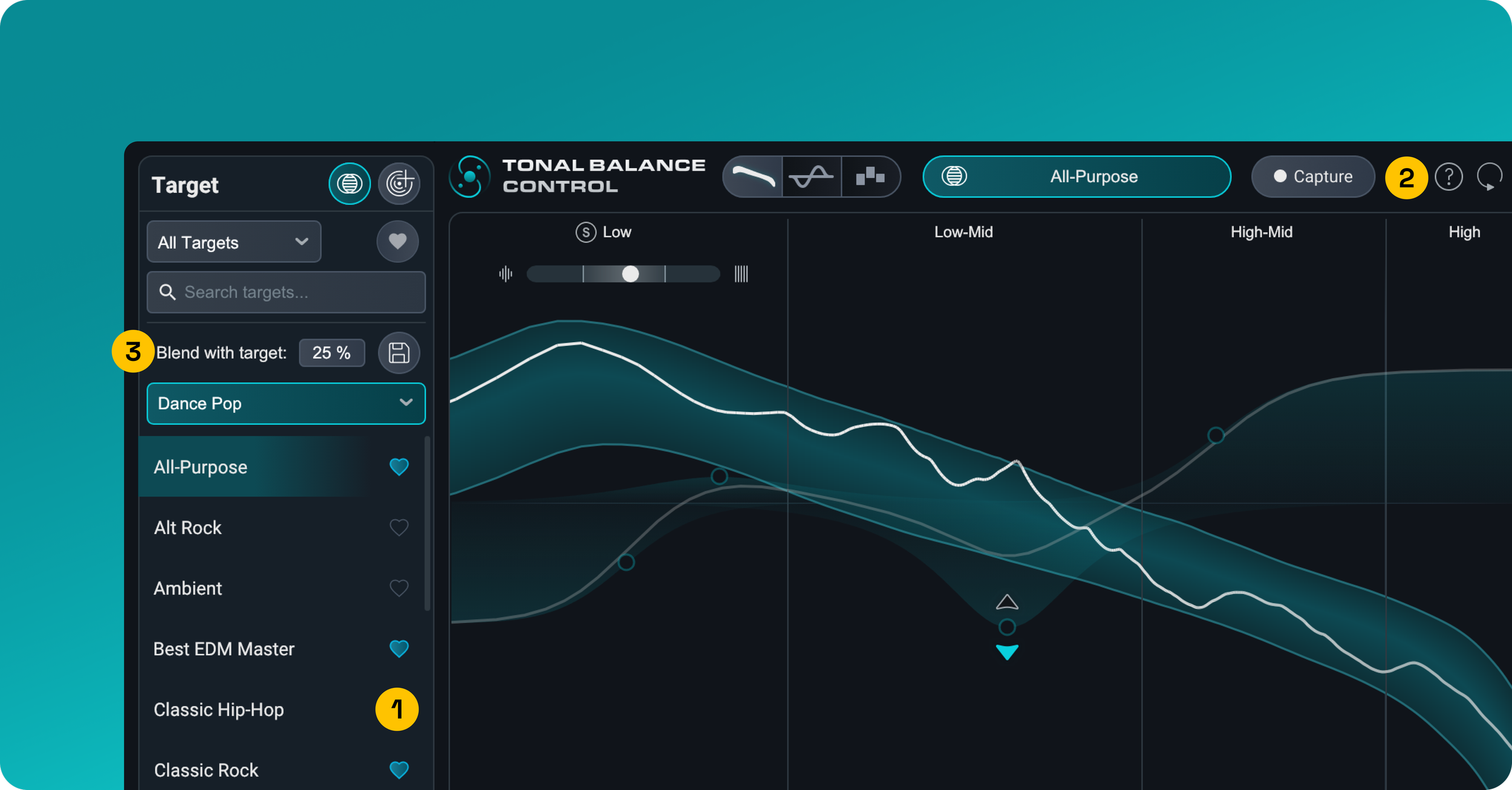
From fixed targets to a personal library.
Rather than trying to classify an ever-expanding universe of genres, we gave users the tools to build and curate their own reference library.
As the target library grows through capturing and blending, finding the right reference quickly becomes essential. When scope constraints put deeper organizational tools at risk, I pushed for search and favorites as a lighter solution that still addressed the core user need.
1. Expanded target library
The default target set was expanded with subgenre-specific references, increasing coverage and improving baseline relevance.
2. Capture from system audio
Users can capture targets directly from their system audio, pulling references from any song, instrument, or sound they can find.
3. Blend targets together
Users can combine multiple references to create hybrid references tailored to any style.
Outcome
92% of beta users found it easier to create a useful target with the new tools. Users could now capture references from any song, blend styles into custom targets, and build a personal library that grew alongside their taste. No predefined genre set could ever do that.
Unifying analysis and action
Showing the problem but not fixing it
Tonal Balance Control provided clear insight into tonal balance, but lacked a direct way to act on that information. Users were required to rely on other tools to make adjustments, creating friction and reducing its value as a standalone product.
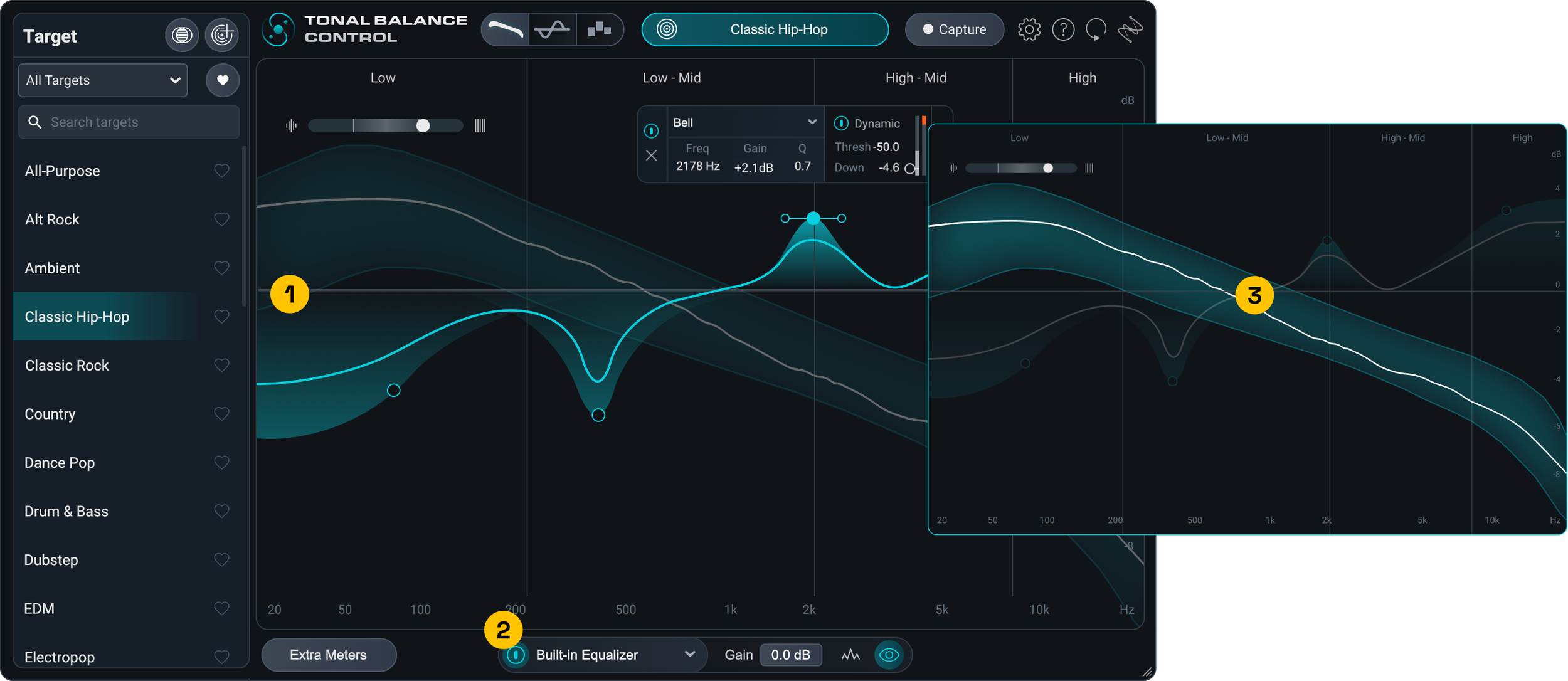
Closing the loop between seeing and doing
The original proposal was a toggle-able EQ tray that expanded below the main meter, keeping analysis and adjustment in separate spaces. I advocated for placing the EQ directly on top of the meter instead, so users could make adjustments while maintaining a continuous read of their tonal balance. The challenge was making two overlapping interactive elements work without each interfering with the other.
1. Integrated EQ with meter
The EQ and target meter share the same visual space, letting users make tonal adjustments while seeing exactly how those changes move them toward their reference in real time.
2. Built-in EQ for standalone editing
A native EQ enables users to make tonal changes without relying on external plugins, increasing the product’s standalone value.
3. Context-aware clarity
Rather than forcing a choice between seeing your balance and adjusting it, the interface reads your intent and shifts focus automatically, with the meter receding during EQ adjustments and returning during analysis.
Outcome
Adding the EQ directly into TBC shifted the product from being exclusively a passive reference tool into a self-contained tonal balancing workflow. 90% of beta users found it easy to apply useful tonal adjustments with the new workflow, validating that the added capability reduced friction and shortened the time to reach a release-ready state.
Surfacing what TBC already knew
The data was there. Users just couldn't see it
Users wanted deeper insight into how their mixes compared to a target. Much of this analytical data already existed across iZotope's product ecosystem, but it wasn't accessible within TBC. The opportunity was to bring that intelligence into the referencing workflow in a way that felt native rather than bolted on.
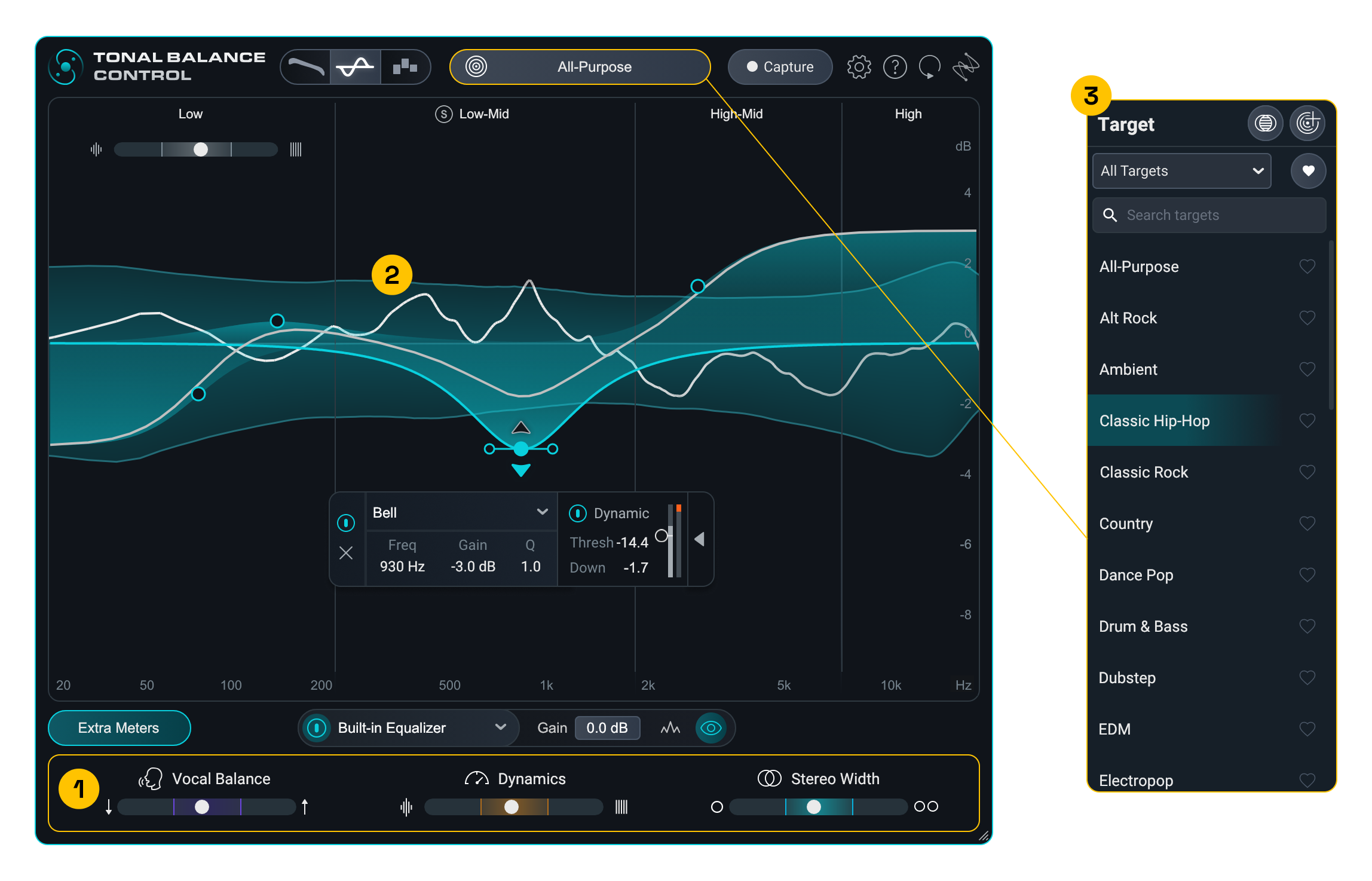
Surfacing depth without adding noise
Together with Product Management and Sound Design, we expanded the system's analytical scope by introducing additional meters and enhancing the information available within targets, providing a more complete view of how a mix translates.
1. Additional meters
Vocal level, stereo width, and dynamic contrast are measured against the target, expanding the system beyond tonal balance and providing a more complete picture of mix translation.
2. Leveled view
The tonal balance curve is flattened to a fixed baseline so the gap between your mix and the target directly maps to the EQ adjustment needed to close it.
3. Progressive disclosure
Additional panels like extra meters and the target menu can be toggled on or off, allowing users to access deeper insight and functionality without introducing persistent visual noise.
Outcome
95% of beta users found it easy to get useful information about their mix with the new Extra Meters and Leveled View. Bringing this depth into TBC meant engineers could now see exactly how their work measured up against professional standards without leaving the referencing workflow.

Impact
“Honestly great additions to a plug-in I truly thought could not be better. Knocked this out of the park guys the extra meters are things I didn’t even know I’d want but now use every mix! 10/10 plug-in!”
More relevant, actionable tonal workflows
Tonal Balance Control 3 generated approximately $400K in revenue within its first two weeks, with continued growth trending higher. Notably, 11 percent of users were new to iZotope, indicating strong expansion beyond the existing customer base.
The update repositioned the product from a static reference tool into a more flexible, self-contained system. By making targets more relevant, enabling direct action, and expanding analytical depth, it increased trust in the system and accelerated time to meaningful results.