Catalyst Series
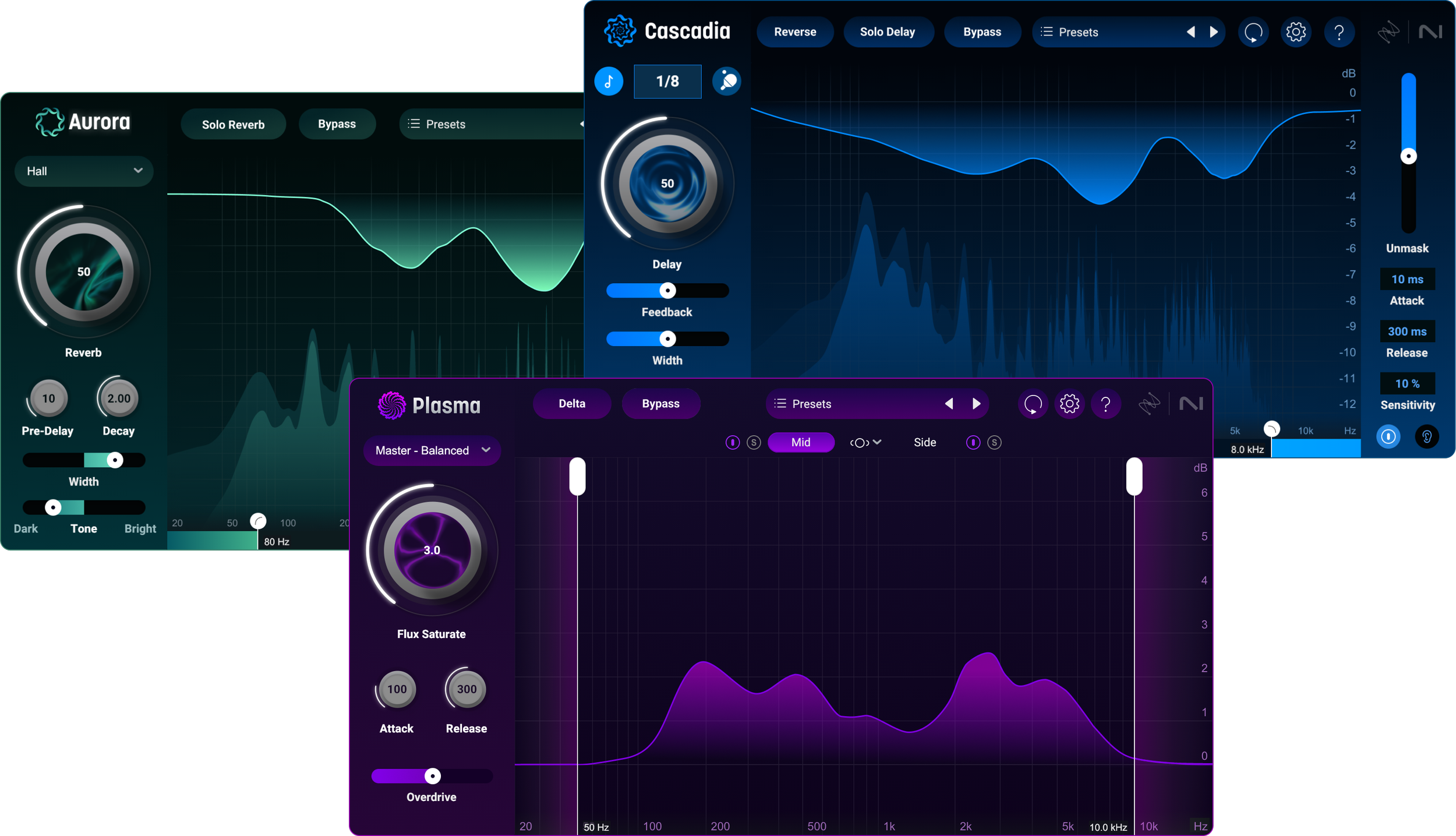
Three focused plugins built to make iZotope's most powerful technology accessible to everyone. Simple by design, powerful by default.
Target Audience
Music producers and engineers, beginner to professional
Environment
Digital audio workstations
Role
Lead Designer
Scope
Multi-product series design

What is the catalyst series?
Three products, one consistent interaction model
Plasma, Aurora, and Cascadia are audio plugins built on a shared philosophy: powerful processing with simple controls. Plasma adds warmth and energy through harmonic saturation, Aurora creates deep reverb while keeping the dry signal clear, and Cascadia takes that same principle and applies it to delay. Each has its own distinct character, unified by an interaction model designed to produce great results with minimal input.
The challenge
Defining a simpler, faster category of tools
iZotope's ecosystem is known for depth and precision, but that complexity, and the $500+ price points that came with it, created a barrier for a large portion of potential users. Research across the product line showed this recurring theme. The opportunity was to define a new category of focused, affordable tools that delivered immediate results without requiring extensive setup or expertise, and to prove that iZotope tech could work in a completely different format.
Designing outside our comfort zone
A simpler product in a complex product ecosystem
iZotope had built its reputation on deep, complex tools trusted by professionals. Releasing a series of intentionally simple, $50 plugins was a deliberate departure from that identity. The risk wasn't just whether the products would work, it was whether they would be taken seriously by an audience that associated iZotope with sophistication. At the same time, designing something simple enough for anyone to pick up while still delivering results that professionals would respect required holding a very specific line. Too few controls and the products would feel like toys. Too many and the whole point was lost.
The Single Control Philosophy
Radical simplicity as a competitive advantage
A growing movement toward radical simplicity was reshaping how producers approached their tools. iZotope had the technology to compete in this space but nothing designed to deliver it this way. I saw an opportunity to bring iZotope's most powerful processing into a format that could reach a completely different kind of user.
Designing for the first five seconds
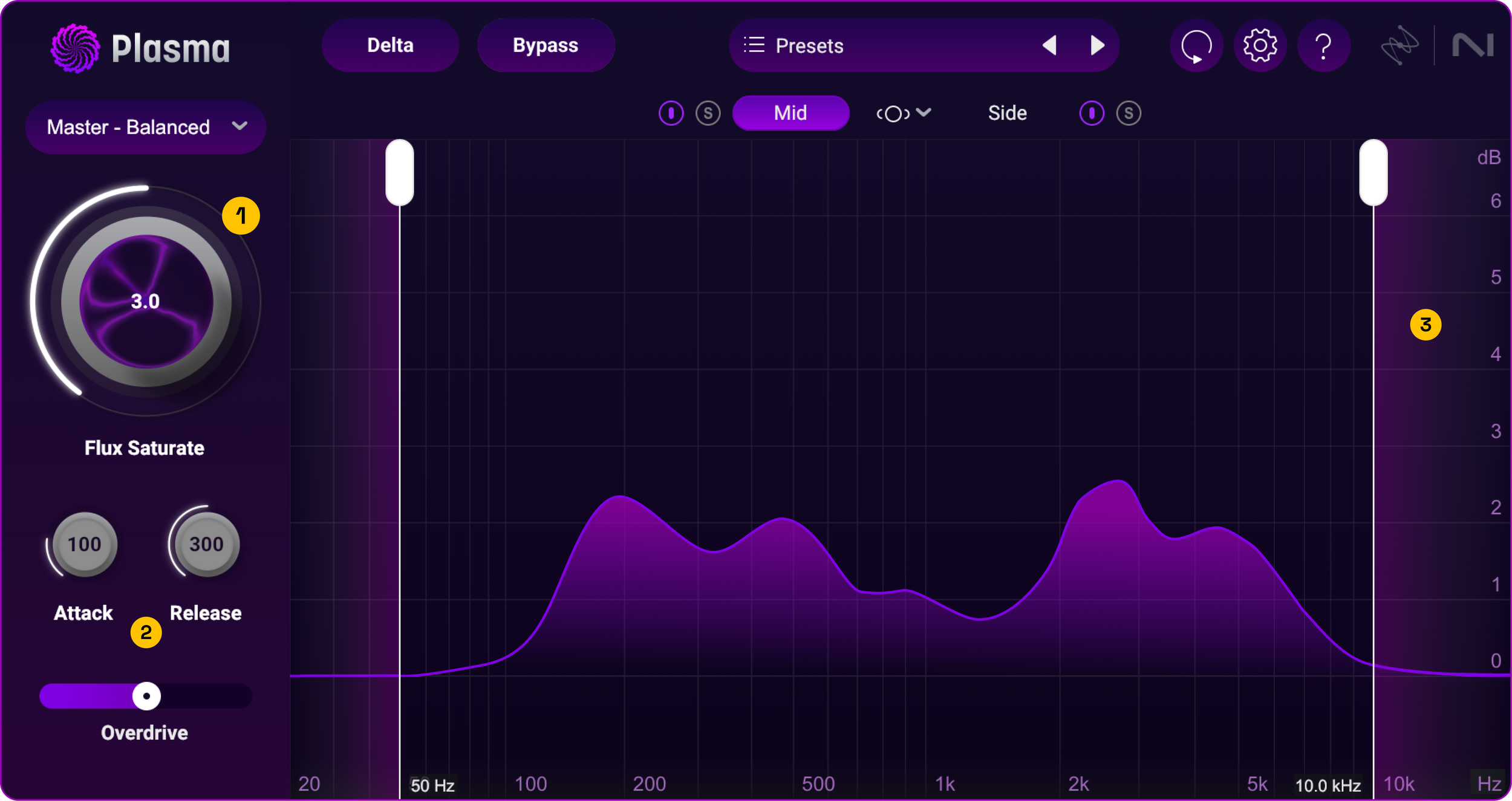
Working closely with product management, we established a clear design principle early: one knob, turn it up and it sounds good. Users should hear immediate, high quality results with a single interaction, with secondary controls available for those who want to go deeper without being required by those who don't. This required maintaining a consistent point of view throughout development as the products took shape.
1. One primary control
Each product centers on a single primary control that delivers high-quality results on its own, allowing users to engage immediately without needing to understand the full system.
2. Secondary refinement
Secondary controls support refinement but are intentionally deprioritized. They enable deeper use without becoming part of the default workflow.
3. Reactive visual feedback
Each plugin features an animated visual at the center of the primary control that intensifies as the knob is turned up, making the effect of the processing immediately visible and reinforcing the character of each product.
Outcome
The result was a set of tools where the first thing you do is the most important thing, and it sounds good immediately. Users could achieve polished, professional results in seconds without reading a manual, watching a tutorial, or understanding the technology behind it.
Distinct identity within a shared system
Same bones, different soul
A shared interaction model was the foundation of the series, but three products with the same structure risked feeling like three versions of the same thing. The opportunity was to use that constraint creatively, giving each product a distinct personality rooted in its name and the world it evoked.
Identity through elemental storytelling
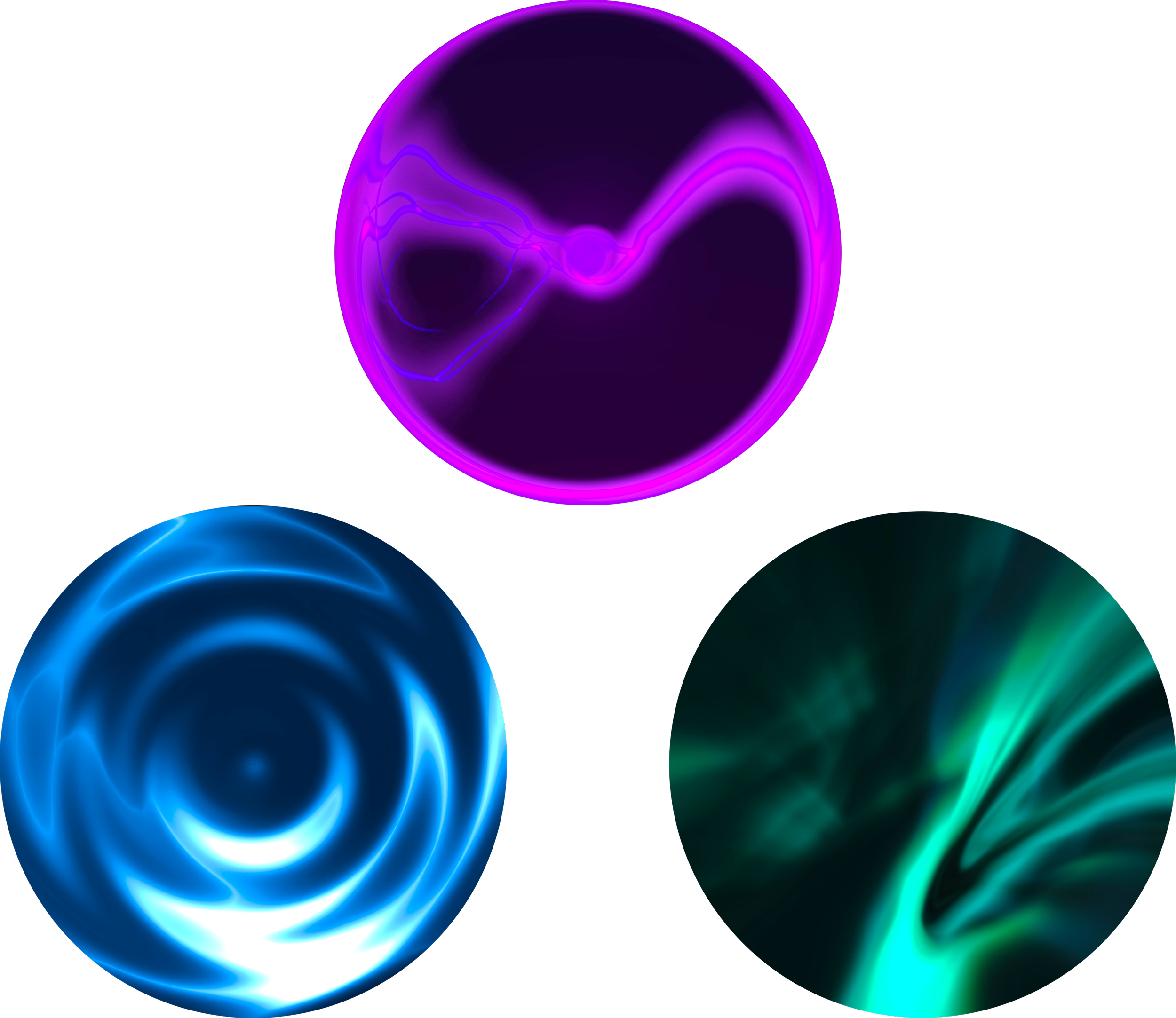
I built each product’s identity around its name and the imagery it evoked, using those references to drive color, motion, and visual tone. This created a clear connection between what each tool does and how it feels, while maintaining a consistent structure across the series.
1. Plasma
Draws from electricity, emphasizing energy, intensity, and high-frequency activity.
2. Aurora
Draws from the aurora borealis, using light and shifting color to reflect atmosphere and space.
3. Cascadia
Draws from water, with fluid motion and softer transitions that suggest flow and continuity.
Outcome
The result is a product family that feels cohesive at a system level while remaining visually distinct at the product level. Each tool communicates its character before you even hear it, reinforcing its purpose without sacrificing consistency across the series.
Motion as feedback
Making the invisible visible
Audio processing is invisible by nature. You can hear a plugin working but you can't see it. For the Catalyst series, I saw motion as an opportunity to close that gap, making the effect of each plugin immediately visible as well as audible, and reinforcing the elemental character of each product at the same time.
Inventing a self-serve implementation approach
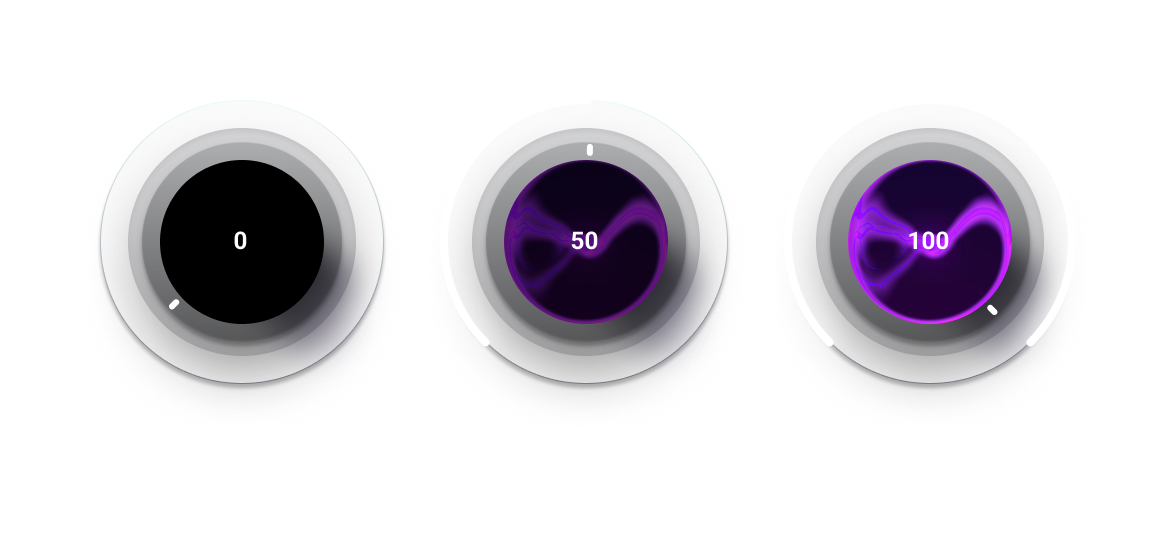
I designed the animations to respond directly to the primary control, intensifying as the knob increases to mirror the strength of the effect. With engineering focused on DSP work, adding new rendering technology wasn't an option. I developed a spritesheet-based approach, repurposing the same system already used to render interface controls, to implement perfectly looping animations without any additional engineering support. I designed and implemented all three myself.
Responsive feedback
Animations respond directly to the primary control, making changes visible as they happen.
Progressively revealed
A dark overlay fades as values increase, revealing the animation beneath and reinforcing the effect.
A novel self-serve solution
By repurposing the existing spritesheet rendering system, I was able to design and implement production-ready animations independently, keeping the work entirely off the engineering critical path.
Outcome
Motion becomes part of the interaction, not an added layer. It reinforces the effect of each tool while remaining performant and scalable. The implementation approach has since been adopted in subsequent iZotope products, extending its impact beyond the initial release.

Impact
“Perfect balance between sound, usability and features. So intuitive! iZotope should be more and more like this IMO!”
A new format that exceeded every expectation
The Catalyst series generated over €600K in its first year across three products, exceeding forecasts by more than 250 percent. Aurora was the strongest performer, accounting for nearly half of total revenue and earning a nomination for a NAMM TEC Award. It was used on major commercial releases, including Chromakopia by Tyler, the Creator.
Beyond the numbers, the series established a repeatable model for simpler, more accessible iZotope products. The design system, interaction philosophy, and motion approach have all been carried forward into subsequent releases.